
When a Teddy Bear Isn't Just a Teddy Bear
Visual Management in Times of Change

My Mont-Tremblant Moment
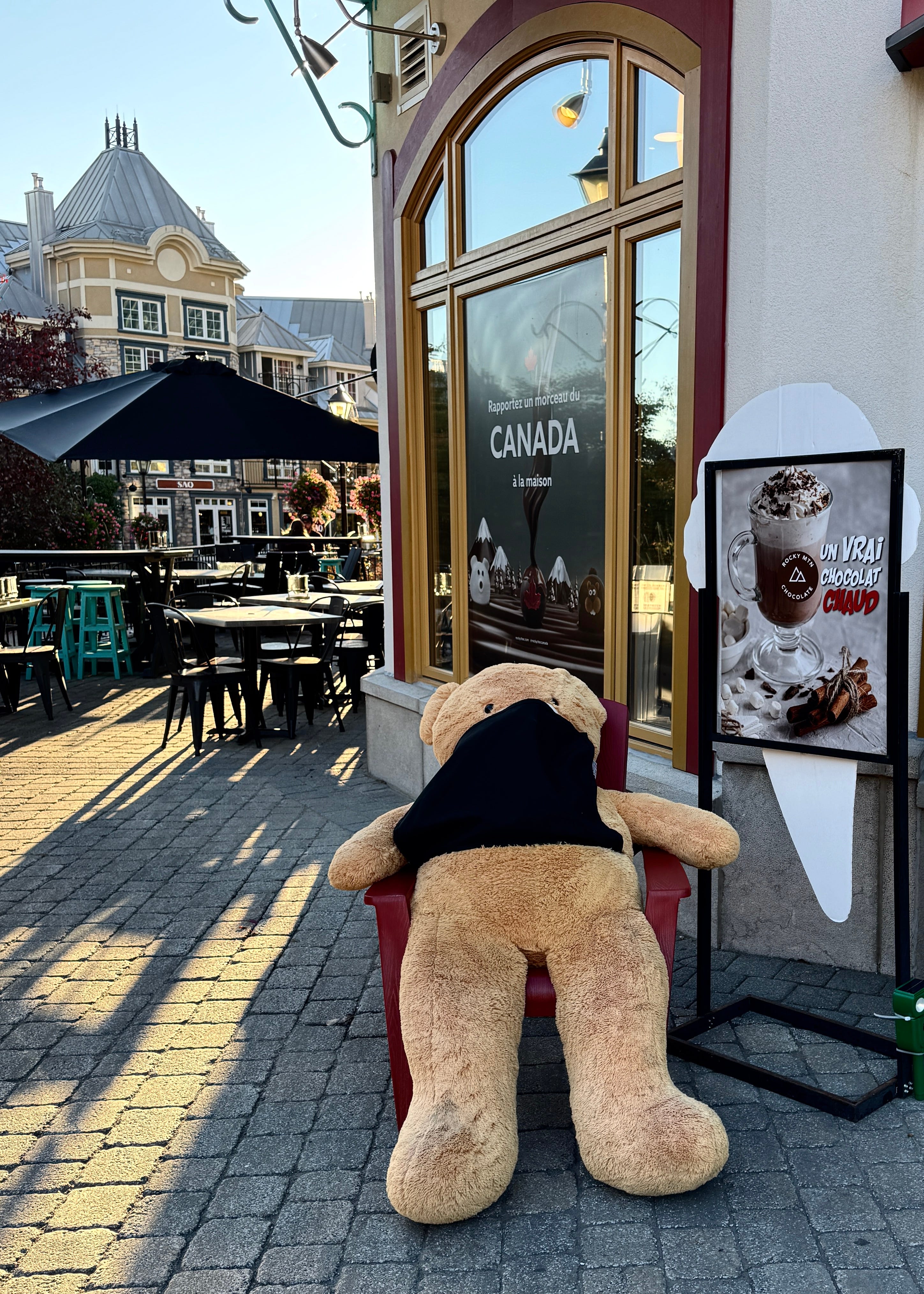
Back in October, as I was wandering through the storybook charm of Mont-Tremblant’s ski village, a sight stopped me in my tracks. Among the Autumn-touched chalets and quaint shops sat a life-sized teddy bear, casually slumped back in a chair. Its simple black shirt, bunched around its neck, created an unintentional image that caused me to pause, as a fleeting moment of unease overcame me in this otherwise fairytale scene.
I stumbled upon this picture again this morning, two days after the fatal ICE shooting in Minnesota. The mask, the obscuring of identity, the underlying threat in what should be safety…
It broke me.
I find myself resentful of this unwanted transformation, that perhaps our most universal symbol of comfort and childhood security can’t escape being rewritten by our current climate of fear.
When Innocent Objects Turn Threatening
The transformation of quotidian otherwise benign objects into sources of anxiety isn’t new to me.
A colleague’s casual oversight at a hotel bar crystallized how 9/11 permanently altered our visual language. His black backpack, left briefly on a chair while a group of us went to dinner triggered an intense, unrepeatable reaction from the irate bartender upon our return. That moment captured the before and after of how we read everyday objects. What was once merely forgetful became potentially threatening. The bartender’s reaction - while startling and yes, wholly justified - reflected our new reality, where an unattended bag could never again just be an unattended bag.
Not too long after while living inside the Washington Beltway, my neighbors and I renegotiated our entire relationship with white vans during the DC Sniper crisis. An innocuous enough vehicle that once simply suggested a flower delivery became a symbol of terror. I remember zig-zagging through parking lots, avoiding gas stations, my heart racing with every white vehicle that passed.
The Shifting Ground of Visual Meaning
This unintended metamorphosis carries crucial lessons for my fellow visual management professionals. Our work exists in a living context, where meanings shift like tectonic plates beneath seemingly stable ground. What reads as welcoming today might trigger anxiety tomorrow. A design feature that felt universally safe last week might suddenly carry unintended implications tomorrow.
This isn’t about being reactive, it’s about building visual systems with inherent adaptability.
We need our systems to be able to breathe and evolve with changing contexts that acknowledge how different viewers bring different lived experiences to their interpretation. Most importantly, we need to recognize that visual meaning isn’t static but rather, it’s a dynamic conversation between design and society and the times in which they exist.
Building Adaptable Visual Systems
Like that teddy bear, our visual systems must be ready for unexpected reinterpretations. The challenge isn’t to prevent these shifts in meaning, but to create structures flexible enough to adapt when they occur, while maintaining their core function and purpose.
For visual management professionals, this means:
Regular auditing of visual elements against current events;
Building systems in increments that can evolve without completely needing to reconstruct the whole; and
Creating and maintaining tight albeit diverse feedback loops to catch shifting interpretations early on.
Of course, even the most resilient visual systems won’t be able to avoid all triggers. But the successful ones - the most humanly impactful ones - will nevertheless be predicated on an understanding that meaning is fluid, and that adaptation isn’t a bug in the system but rather, it’s among its most vital features.
Beyond systems and strategies though, this experience reminds us of something more fundamental: that behind every visual interaction is a human being carrying their own lived experience. That teddy bear wasn’t inherently threatening, but its unintended resemblance to something traumatic created a moment of genuine distress. And I’m certainly not alone in experiencing such unexpected triggers in otherwise ordinary spaces.
The Human Side of Visual Management (Hint: It’s ALL Human)
This is why visual management isn’t about efficiency or aesthetics. It’s about caring for the human experience in our shared spaces. When someone expresses discomfort with an image or a symbol, even if others see it as harmless, the response isn’t wrong - it’s their lived reality. Creating truly inclusive environments means honoring these different perspectives and being willing to adapt our visual systems when they unintentionally cause us to stress.
Sweet Reminders of Simple Joys
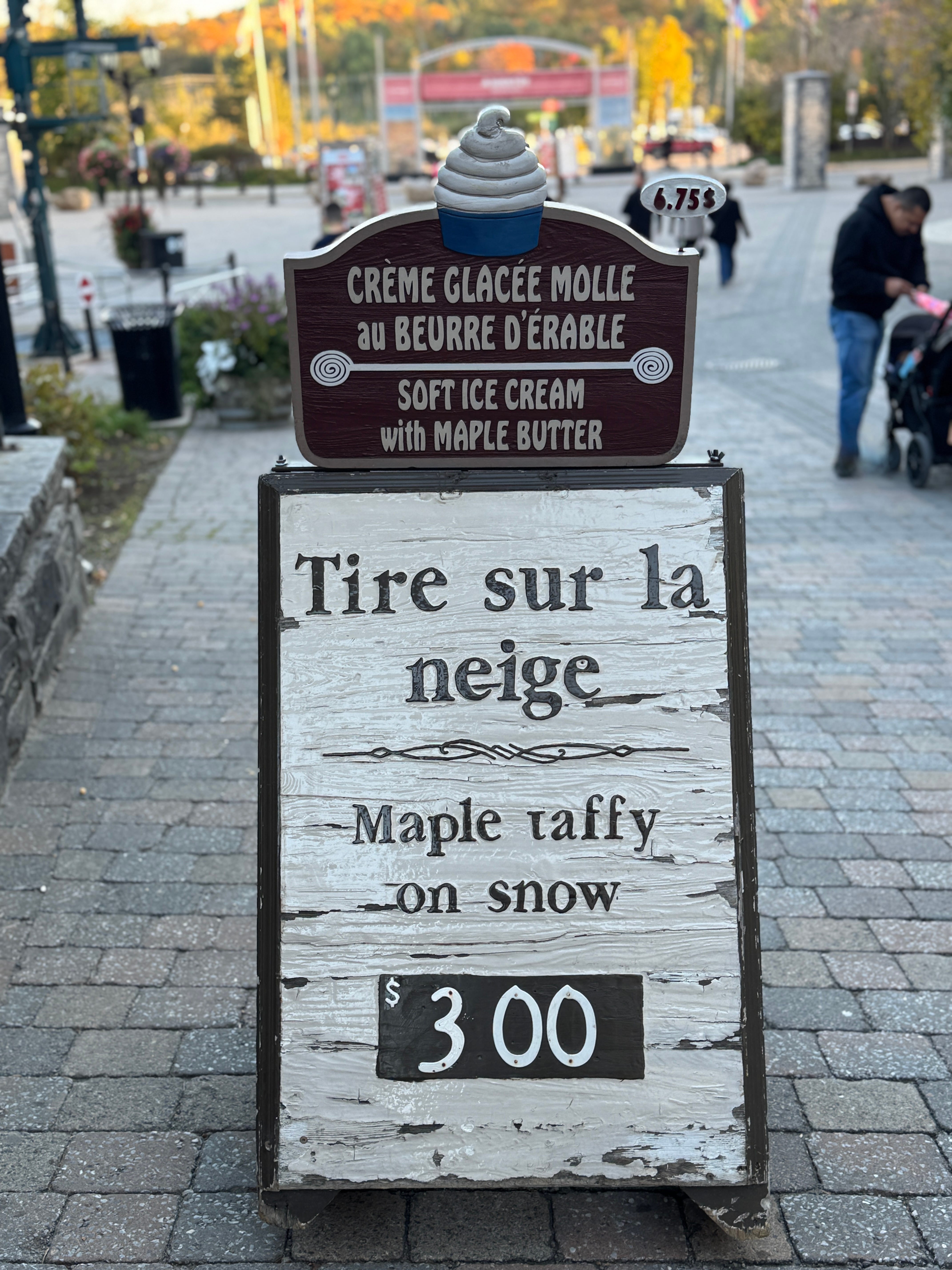
Yet Mont-Tremblant offered another lesson that day. Among these same streets where a teddy bear triggered unexpected darkness, I discovered the quintessentially Québécois tradition of tire sur la neige - maple taffy on snow. Fresh maple syrup, poured in strips across pristine snow, transformed into a chewy golden candy as little ones and their parents alike gathered with wooden sticks ready to roll up the simple pleasure.
Here was another kind of visual transformation. It wasn’t one born of fear or trauma, but of delight. A reminder that some objects and spaces may take on heavier meanings in our changing reality, while others still hold the power to create those psychologically vital moments of wonderment connecting us to tradition, to each other, and to the simple pleasure of shared experience.
Moving Forward: Creating Trauma-Informed Visual Spaces
At its heart, visual management is always about people. It’s about creating spaces where everyone can feel psychologically safe and secure enough to focus, collaborate, question, and thrive. Sometimes that means being willing to change something as simple as a color or a symbol, not because it’s inherently problematic, but because we value the well-being of our colleagues and community members more than we do any particular design choice.
Like that teddy bear reminding us how quickly comfort can transform into unease, we must remember that humanizing our workspaces means staying attuned to how our visual choices affect every member of our community. In doing so, we create environments that aren’t just visually managed, but emotionally intelligent and deeply humane.
Understanding the nuances of visual management - from practical implementation to human impact - is crucial for creating truly effective Obeya rooms and visual management systems. If you’re interested in exploring these concepts further and learning how to create adaptable, human-centered visual management spaces, consider joining our upcoming Obeya Association-accredited Guided Obeya Fundamentals Certification class this month, where we will dive into not just the technical aspects of visual management, but the human elements that make these systems truly effective. I’m so love teaching this class and do hope you’ll consider joining.
Only after I was editing this piece did it strike me this is my fourth post in the past few months using a teddy bear or other childhood encounter as a lens for social commentary. Perhaps there’s something particularly powerful about these childhood tokens serving as unexpected mirrors for our times. These universal symbols of comfort and innocence seem to be uniquely positioned to reflect the complexities and challenges of our current world. Or maybe, like the visual management principles we teach at Modus Institute, I’m just becoming more attuned to how seemingly simple objects can carry deeper meaning. If you’ve noticed your own teddy bear moment in your workspace’s visuals, I’d love to hear about it and perhaps we unpack it together at our next (free) Open Lean Coffee. Register on our Modus Calendar here. - Toni