
Situational Awareness: It's What Eats Data for Breakfast
Because the sign shouldn't be more trusted than the thing it represents.

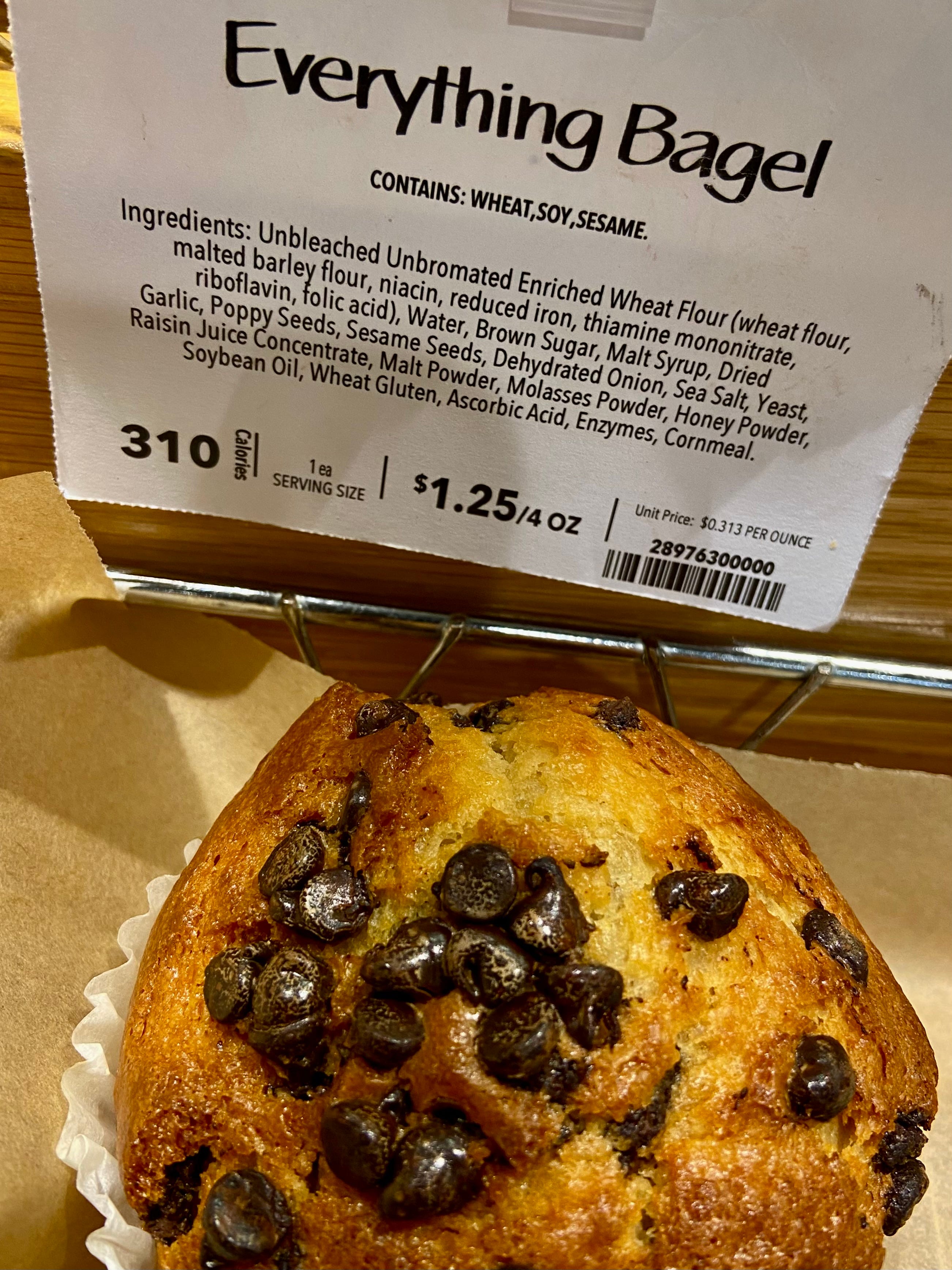
I love finding business metaphors in the wild, and this one - dare I say - takes the cake.
What is obviously a chocolate chip muffin identified as an “Everything Bagel” isn’t simply a bakery error, it’s a reminder that metrics, KPIs, and dashboards might say one thing while reality quietly disagrees.
In Learning to See John Shook shows us that real Lean thinking begins with an observation: seeing how work actually flows, rather than blindly accepting what the numbers say. When we map our value stream and see our work as a process we discover the gaps and - by extension - the truths that metrics alone miss.
Situational awareness holds numbers to task, shattering the illusion that data is our single source of truth.
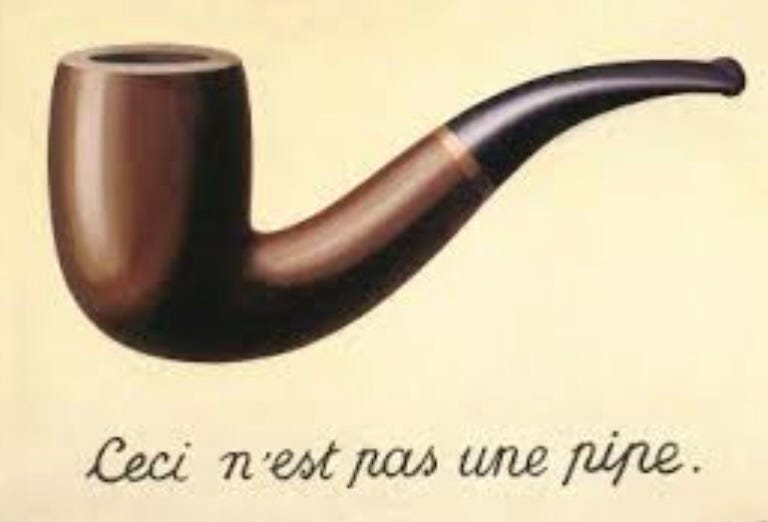
One of my favorite surrealist painters René Magritte’s famous “Ceci n’est pas une pipe” says it all. A picture of a pipe isn’t a pipe at all, much like a dashboard isn’t the work itself. When we mistake the representation for reality, when the simulacrum becomes our truth, critical mismatches persist, even if they’re as clear as a muffin in front of a bagel sign.
As Laurie Anderson said, “art is about paying attention.” I’ve long argued this is the art of both love and Lean, too. Whether navigating the NYC subway as a high school freshman or learning to sail as an adult, I learned situational awareness isn’t a “nice to have” - it’s a survival skill. Lean can’t be reduced to weekly coaching sessions or monthly kaizen events. It requires constant, rigorous attention to what’s actually happening now.
The bagel-labeled muffin proves the point: if we’re only checking during scheduled reviews, we miss the mismatches happening in real time. Obeya solves this by making situational awareness continuous - not episodic. It’s the difference between asking, “What did the dashboard say last week?” and “What do we all see happening right now?”
This is where Obeya shines. More than a room with visual radiators, the structure, underlying philosophy, and related behaviors of the Obeya creates a shared vision and psychological safety, making it possible for anyone to point and say, “Dude...I’m from Brooklyn and that ain’t no bagel…so we need to fix it now.”
Only then can there be real alignment on the definition of a quality outcome.
So stop letting dashboards dictate the story of your work. Join our Obeya Fundamentals class to discover how awareness - not just metrics - drives the creation of value - and help your team see what’s really on their plate.
Learn a better system. Register today for the Obeya Fundamentals Certification.
Join me and Jim Benson - North America’s only Obeya Association senseis - as we show you how to:
See what’s actually on your plate. Build visual systems that reveal the gap between what your metrics claim and what’s really happening on your team.
Create the psychological safety to call a muffin a muffin. Foster environments where teams feel safe pointing out the mismatch between dashboards and reality without fear of reprisals.
Replace the treachery of dashboards with shared situational awareness. Design collaborative spaces (virtual and physical) where everyone sees the same work, not just compelling interpretations of data.
Transform observation into aligned action. Move from “The numbers say…” to “We can all see…” through visual performance disalogues that ground decisions in reality.
Stop mistaking the sign for the thing itself. Start seeing what is really there.
Representation of the work is not the work.
This has two profound consequences:
1. We shouldn't automatically trust that dashboards, KPIs, etc., accurately represent what we're doing.
2. We have a tendency to paint a rosy picture when we're visualizing the work.
Scarcely ever would there be a workshop where a team trying to map the work doesn't need to be reminded that "we want to visualize work as it is, not as we'd like it to be."
In a recent example, I suggested visualizing leadership work (strategy, hiring, etc.).
"But we don't have a stable flow, and we don't keep work in progress limits," was the response.
So what? That's work. That's how it looks right now. To establish trust in the visualization, it must represent reality accurately. Otherwise, you end up with a muffin labeled as a bagel.
Great piece. You should write a book!