
Moving Visually: Moving to England with Minimum Fuss
Visual Management, Personal Kanban, Obeya - Walking the Walk

Part 1
The audacity to begin is nothing without the clarity to continue.
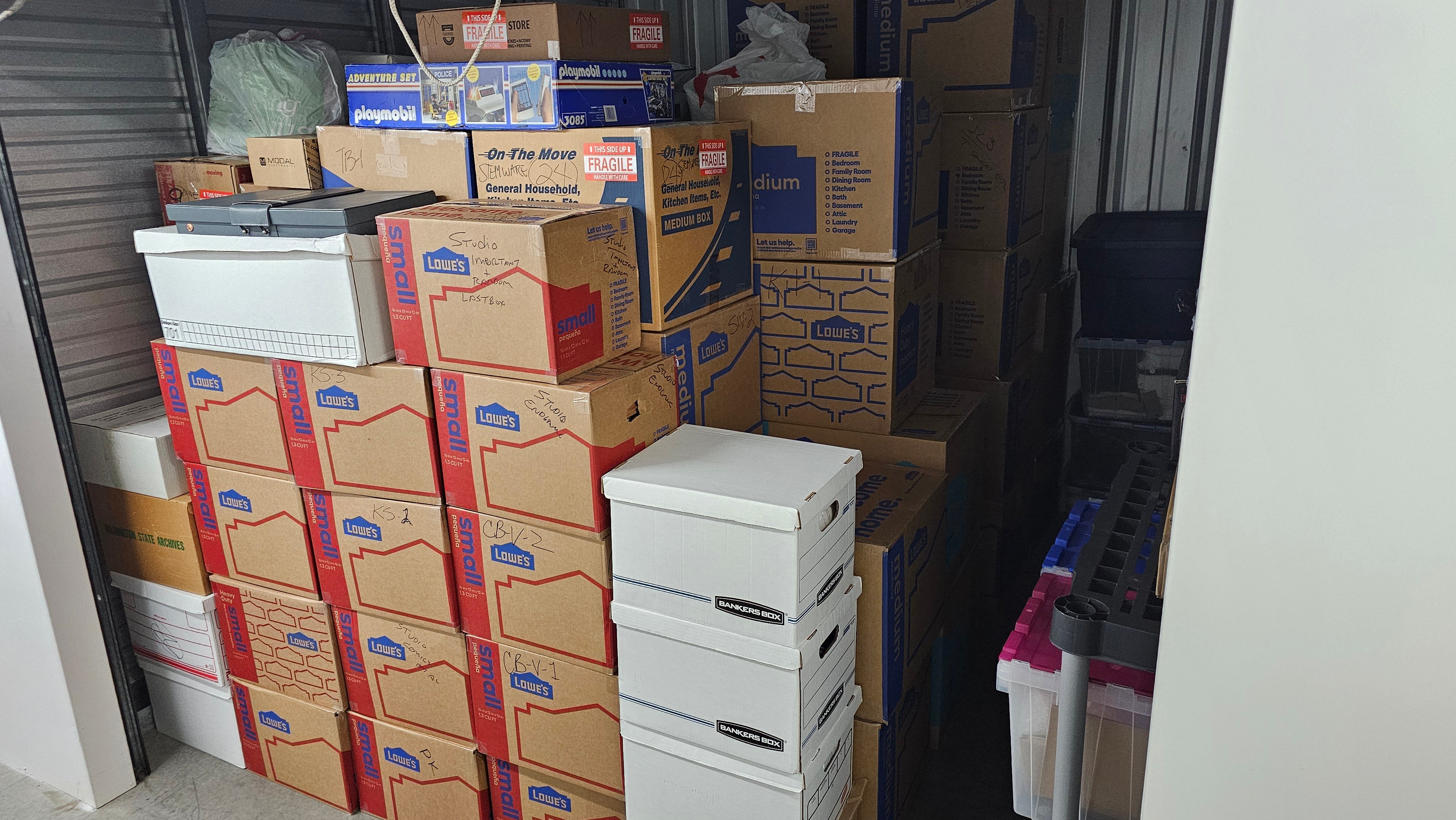
Moving, whether across continents or oceans, is equal parts exhilarating and terrifying. For both of us, recent (still active) relocations became a masterclass in balancing chaos with clarity. We’re known for reassuring people that chaos can be confronted and calmed, but we are also human beings (as are you).
Full disclosure: these moves put us to the test. We succeeded, failed, and succeeded again.
For both of us, this involved getting on the visual management wagon, falling off, and getting back on over and over again. And that, for us, was the big lesson (and continues to be).
Yes we transformed overwhelming transitions into structured, collaborative journeys. Yes, they blew up from time to time. And yes, we achieved (or are achieving) our goals.
Here’s how we used our visuals…and our wits…to weather the storm.
Visual Management: Seeing the Forest and the Trees
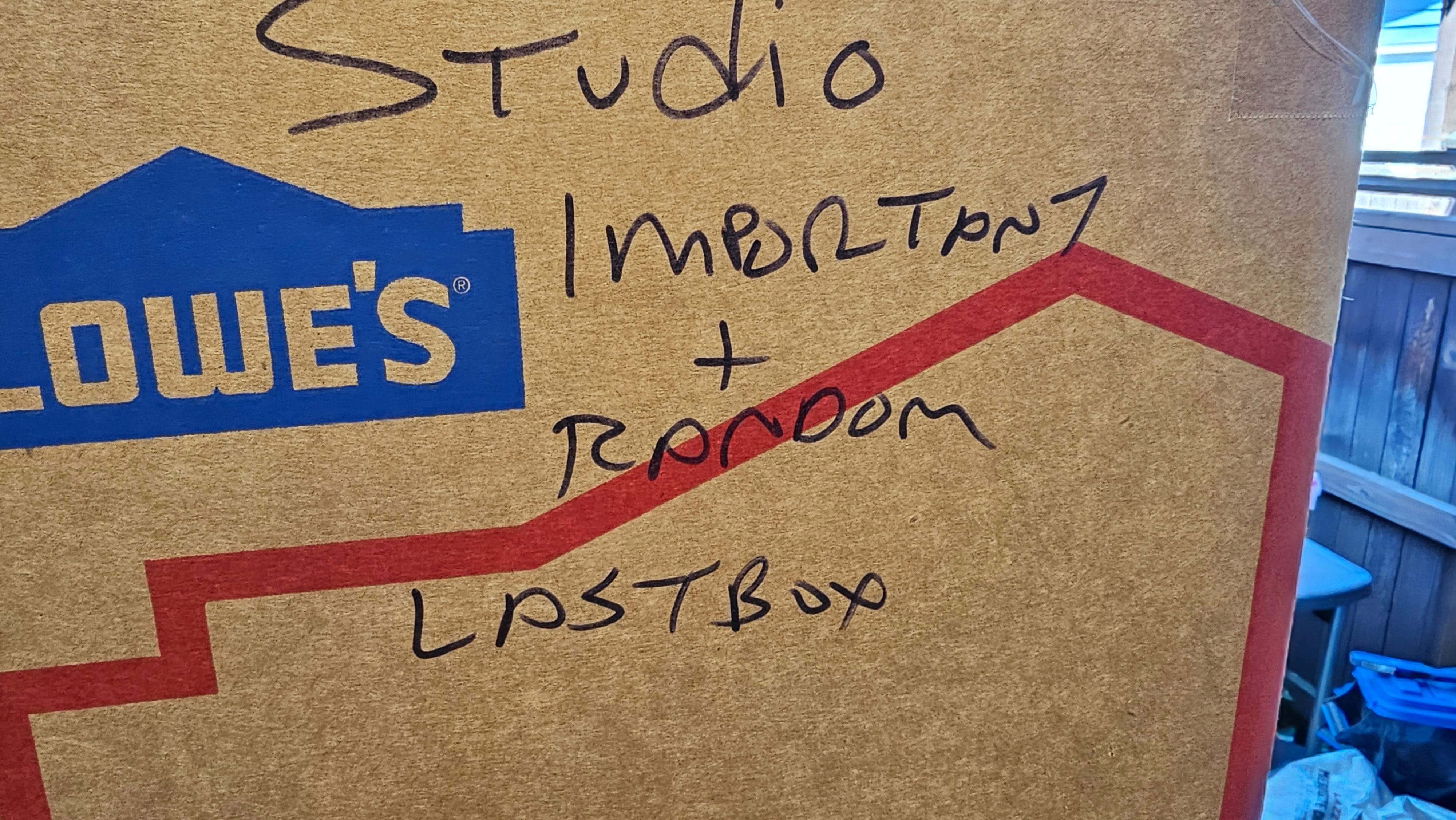
For both of us, we looked at our homes that had our personal, artistic, and professional lives with artifacts and accessories gathered over years. Every object had a “reason” and every reason had to be questioned, not just what would be moved and what would not, but what was that object’s role? How was it emotionally valued? In what “box” (real and figurative) does it belong?
Moving amplifies complexity: logistics, deadlines, and emotions collide just like any other project. The difference is when you are moving you, there is nowhere to hide. Your team is very small, your workload is fraught with complexity, and the cost for failure is high.
Wait a minute…there’s no difference there. We just convince ourselves that our work lives aren’t that personal.
Some concepts we needed to visualize and balance:
Exhilaration (the desire to act) vs. Fear (withdrawing from action): The excitement of a fresh start clashed with the dread of overlooked details and the volume of things. (Toni moved 600 boxes to Canada. 200 were books). Visualizing the situation created a bounded “big picture,” reducing ambiguity (fear) and fostering action (exhilaration). This is what we really mean when we say “actionable information” - it’s information that gives you the ability to act with confidence.
Toxic Generation vs. Confident Action: In our class Cleaning Toxic Waste, we talk a lot about how confusion and misinformation are toxic. When we map a value stream, our goal is to reduce confusion by understanding who needs what, and when. When we work alone or in small groups, such confusion might seem easier to mitigate, but it turns out that it’s actually harder. We discuss less, assume more, and are surprised more. For both of us, when we became stressed, it was a clear indication that we needed to go back and visualize what was wrong…even or especially if it seemed like an interruption.
Part 2
Personal Kanban: From Overwhelm to Ownership
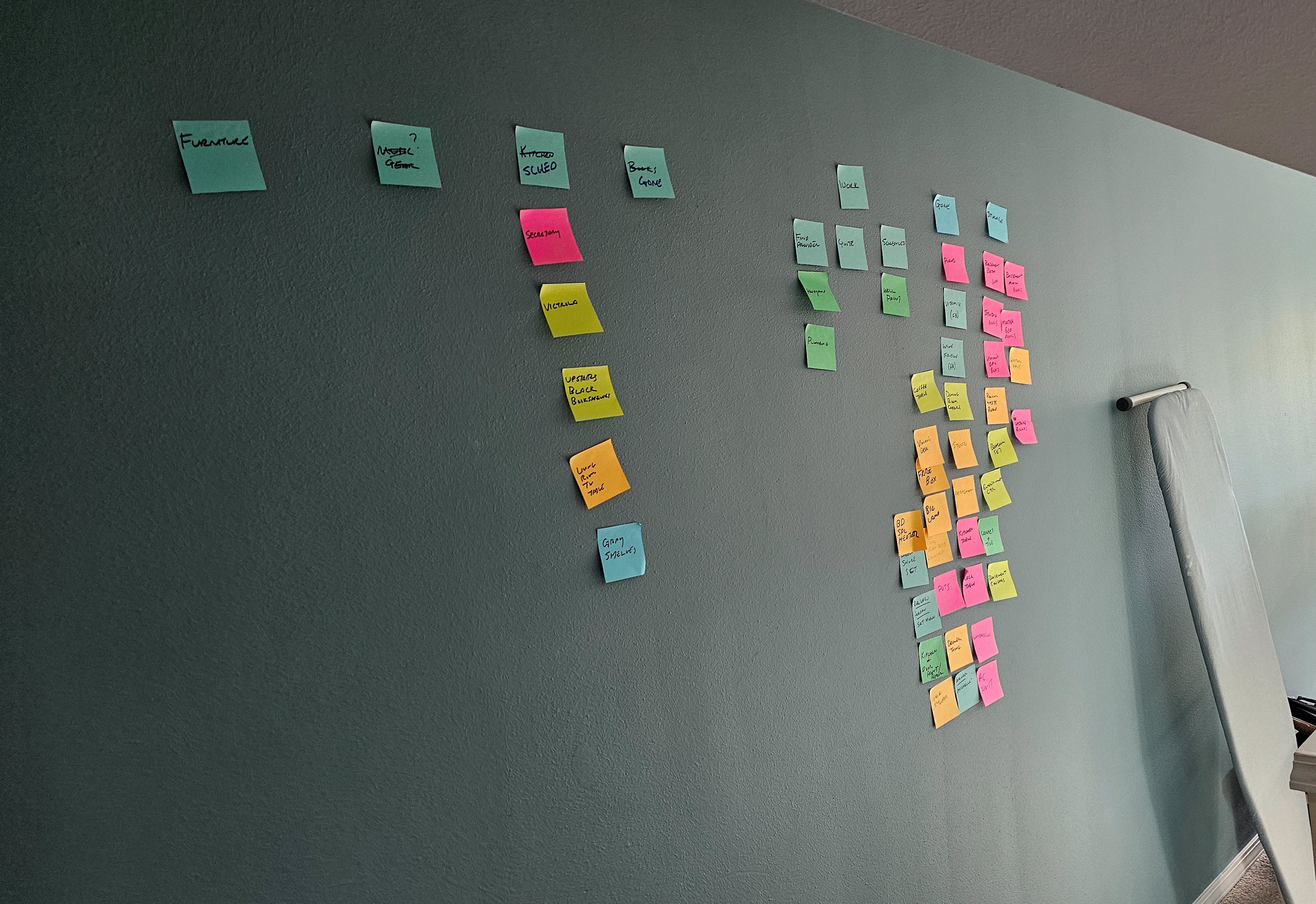
It’s not surprising that we would use PK to help with our moves. Personal Kanban’s two rules (visualize work and limit WIP/work-in-progress) provided structure for what we needed to see, do, and learn. There were so many things we were keeping track of.
We were giving things away, selling things, packing things, taking things to the dump, recycling things, classifying things, lifting things, shifting things, continuously negotiating with our partners, shutting off utilities, dealing with legalities, discovering new things that required maintenance, an oh - we were running Modus Institute and working with students and clients and needing to eat, sleep, and shower.
All this activity needed to be calmed, otherwise all interruptions would have the same weight, and real-time prioritization would be impossible. Given the inherent overwhelm of the tasks-at-hand, being able to rapidly calm existing and emergent work was the only way to maintain sanity.
And again we balanced:
Emotional Regulation vs. Information Overload: By breaking the move into columns (e.g., “To Pack,” “In Transit,” “Unpacked”), tasks felt manageable. Toni’s LinkedIn post emphasizes how this reduced decision fatigue: “Seeing progress as sticky notes moved to ‘Done’ was a dopamine hit amid the chaos”.
Agency vs. Uncertainty of Workload: Jim’s boards specifically aimed at understanding which types of emergent work could be batched, queued, or otherwise calmed, by dividing work into functional groups like “To Sell”, “To Donate”, “To Hire”, or “To Learn.” Over the course of his move, his board’s functional areas evolved. For example, as contractors were discovered and hired the To Hire section changed from columns like “researched”, “interviewed”, “proposal” to “scheduled,” “implementation,” and “done”. And even during implementation, there was an area for unexpected work (if you ever hire a contractor and they don’t discover something you didn’t expect, you likely hired the wrong contractor.)
Part 3
Obeya: Collaboration in the Eye of the Storm
Also full disclosure, during these moves we both had Obeyas and we both mostly used them alone. Our partners saw them, talked about them, but we were the partners-in-charge of our relocations and these were very much “Personal Obeyas”. Why? Because moves involve teams (e.g., family, movers, realtors), and they involve a lot of direction. For both of us, the concept of an Obeya, a shared visual space that helps you control your work, became indispensable.
At the center of our Obeyas were certainly our Personal Kanbans. But around that were more subtle visual controls. Both of us had catalogued our boxes, (SW1 – Sweaters 1, KIT13 – Kitchen, etc). Jim had over 40 boxes of just Kitchen. In turn, these boxes were grouped for shipment so everyone knew (more or less) where there would be fragile things, heavy things, or things of personal importance.
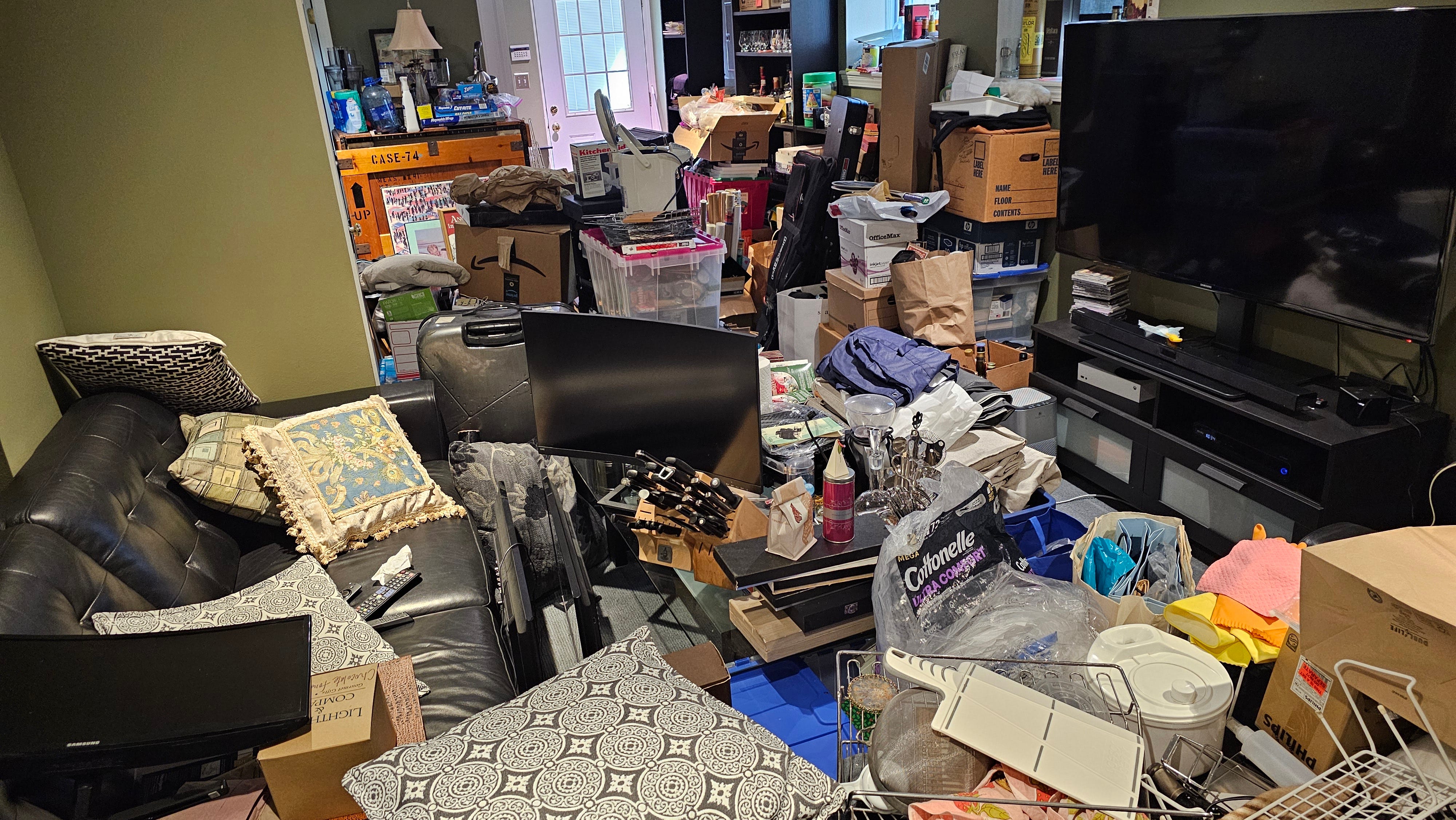
In Jim’s living room, after the furniture had left, the room was quickly 5s’ed to have a space for donations, another for things to sell, and another for things to go on the next truck to storage. And, there was a growing section called “sort” which was filling not-so-slowly with the important things that defied classification.
And we balanced
Real-Time Alignment with Real-Time WTF?: We structured our environments quickly (quicklier?) make sense of new information or things that just didn’t fit classification. The goal wasn’t to classify everything, but to quickly deal with things that didn’t want to be classified. In our Mastering Humane Visual Management with Obeya course we talk a lot about “single-sources truth” even when truth itself is a work-in-progress.
Psychological Safety vs. Real Life Pressure: We also talk a lot about this in just about everything we do. Fear stifles collaboration, because we as individuals start to shut down. True psych safety isn’t necessarily about “speaking up”, it’s about having the bandwidth and ability to work together without fear or blame and often that fear and blame is internal. When we calmed ourselves, we were able to work better with our partners and in turn calm them.
Coda: The Layers Matter
In the last 60 days, we have weathered the initial storms of uncertainty and emergence in these major life transitions. We aren’t done and it certainly hasn’t been “easy”, but how we dealt with the unknown allowed us to quickly create courses of action, reframe surprises as just another thing to do or decide, and move forward with confidence.
We had three levels that served definite needs:
Visual Management provided macro clarity in the face of change.
Personal Kanban allowed focus and pinpoint execution in the face of confusion.
Obeya scaled collaboration in the face of overwhelm.
Together, they gave us a high-stakes transition into a lesson in humane productivity, proving that even mountains can be moved (to) with the right tools.
Our chaos of moving mirrors organizational turbulence. Visualizing work isn’t just about tasks and throughput, it’s about preserving sanity, nurturing trust, and quickly building a future.
<!-- Elfsight Event Calendar | Modus Institute Upcoming Events -->
<script src="https://static.elfsight.com/platform/platform.js" async></script>
<div class="elfsight-app-88b1de25-8456-4e08-af4f-a55b67b0dfb0" data-elfsight-app-lazy></div>