
Building Kanban People Will Actually Use
Anything "out of the box" tastes like the box. Build something delicious.

Everyone wants a quick fix. Plug and play.
Then they wonder why their leanagilekanbansixsigmasafegtd doesn’t work.
Your work is yours. Your team is unique. You do things together as they need to be done now.
So we are constantly balancing what makes us who we are and how to predictably get work done.
So it becomes tempting to believe that once you’ve found a good system, especially something as elegantly simple as Personal Kanban (class), you should roll it out everywhere, in one standard format, so everyone is “doing the same thing.” But the truth is, while every Personal Kanban(book) board shares the same basic DNA, no two teams (or individuals) have the same needs, personalities, or motivations. The most effective boards are those that are purposefully diverse, tailored to the real context of the people using them.
And that’s what this video is about.
One Size Doesn’t Fit All
Years ago, a company called us into implement the same Personal Kanban system across 15 different teams. Just like anything else “by the book”, this created disinterest, frustration, inefficiency, and a lot of workarounds. Why?
While the principles of Personal Kanban (visualize your work, limit your work-in-progress) are universal, the visualizations themselves must be as unique as the teams they serve.
Predictable Flexibility Reflects Humanity and Builds Engagement
A board that fits the team’s workflow, culture, and goals becomes a living system, not just a management artifact. When people see themselves in their board, when it resonates with their personalities and the work they actually do. This means they’re more likely to use it, improve it, and trust it. That’s when the board becomes an “information radiator,” not a chore or a compliance tool.
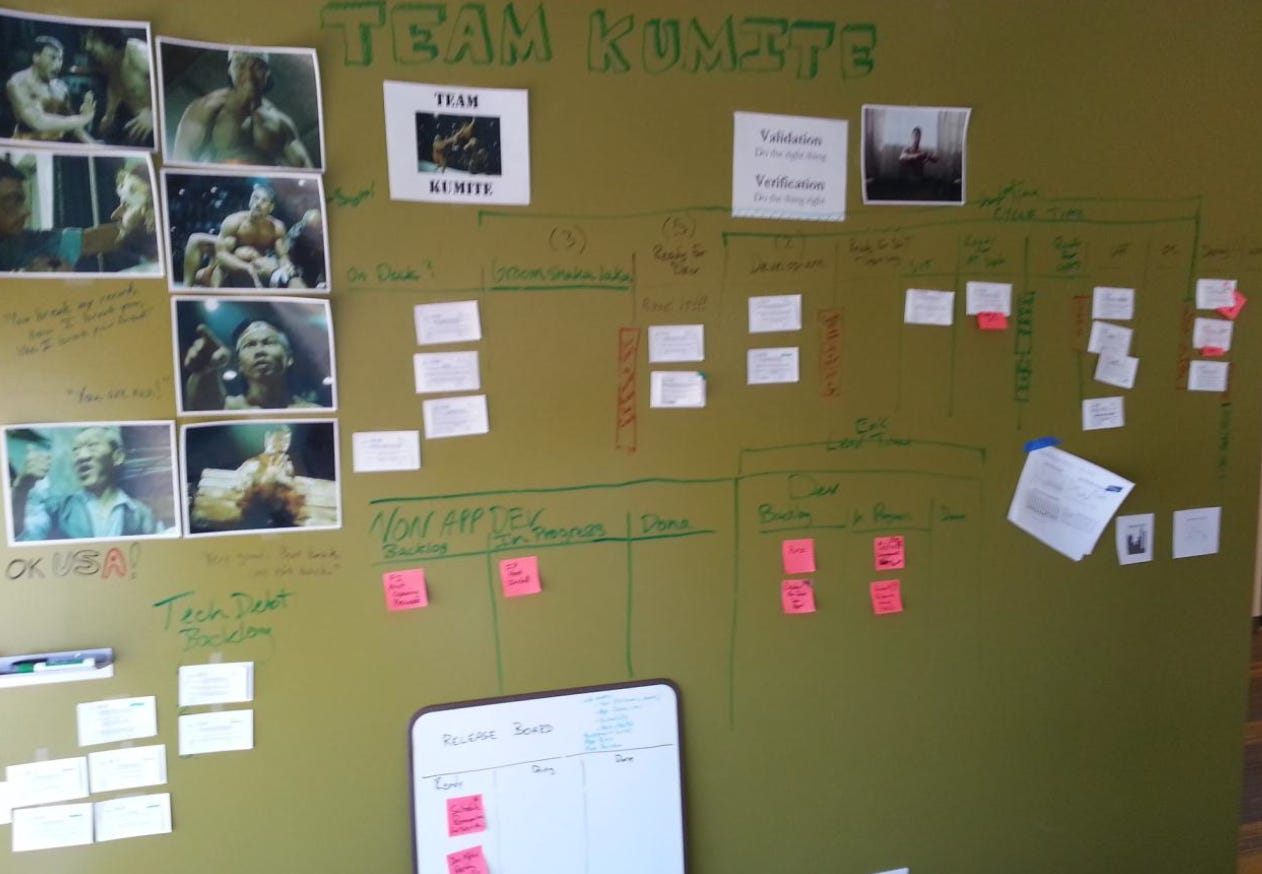
Personality: Some teams want structure and detail; others want flexibility and fun. Boards with celebratory rituals or humor (like Vanilla Ice quotes, seriously, watch the video) become places people want to gather.
Product: The nature of the work matters. Fast-turnaround teams need rapid, social boards, teams with complex testing need more stages and collaboration points, teams that have many customers need visuals that speak to the customers.
Motivation: Boards that tie progress to meaningful, shared goals (like celebrating releases with a burger crawl) build camaraderie, purpose, and momentum.
Seeing the Real as a Strategy Against Toxicity and Isolation
Standardized, rigid systems can breed disengagement, learned helplessness, and even toxicity. When boards don’t reflect the real work or the real people, individuals retreat into silos, hide their struggles, or disengage altogether. Customization and personalization in the way work allows for transparency, celebrates differences, and makes collaboration visible and actionable. It’s a direct antidote to the isolation and opacity that fuel workplace dysfunction.
“Personal Kanban has to be endlessly flexible. It needs to be a system that abhors rules. It’s an enigma. A process that hates process. How is this even possible? … Our lives are not static, and neither is our work. Personal Kanban evolves as our context changes, encouraging us to innovate and invent in response to the variation we encounter daily.” ~ The Shingo Winning Personal Kanban Book
How to Build Helpful Boards That Work
Start with the team’s reality: Map the actual flow of work (Our VSM class is a student favorite, and if you’d like to do a value stream map with us, just DM me). Do not map the ideal. Where does work get stuck? Who needs to collaborate? What motivates the team? Where can we be more helpful to each other?
Co-create the board: Let the team design and iterate on the visualization. Ownership leads to engagement. Change the board often. Have regular meetings where no one leaves before something is changed.
Make it human: Celebrate wins, inject humor, and allow for rituals that bring people together.
Humor is human: I’m going to say humor again. Funny boards are reassuring. They are shared conversations. They are far and away used more than a board without it.
Adapt relentlessly: As the team changes, so should the board. Regular retrospectives and tweaks keep the system alive and relevant.
The Bottom Line
There is no single “right” way to make a Personal Kanban or any kanban board or any process at all. The right board is the one your team will actually use, because it reflects who they are, what they do, and why it matters. Diversity in Personal Kanban isn’t just a nice-to-have—it’s the foundation for real engagement, continuous improvement, and humane work.
Let’s build boards as professional and weird as the people and work they represent. That’s how we create visualizations that don’t just track work, they bring it, and us, to life.
CALL TO ACTION: If this is interesting to you, you can hire me and Toni to help (just message me on substack or linkedin), or take a class at Modus Institute, or simply get a paid subscription to Humane Work here on substack (see below).
This is what we do and have done for decades, and what we work with others on. Simple, visual, humane strategies to fix the real problems of work.